
Automated P&L.
Entries from the accounting software loaded into the warehouse, then split by entity, business or contract according to written rules.
Industry
In industry and services, most of the data lives in an ERP, accounting software and a few business tools. We connect them to a warehouse to produce the P&L and operational statements without re-keying.
WHAT MAKES YOUR DATA DISTINCTIVE
An industrial or services company rarely has a volume problem. It has precise data (accounting entries, contracts, assets) stored in software built for entering, not for analysing.
Finance reporting therefore runs on exports: accounting on one side, asset status on the other, a workbook in the middle. The P&L by business or by contract requires allocation rules that only management control knows.
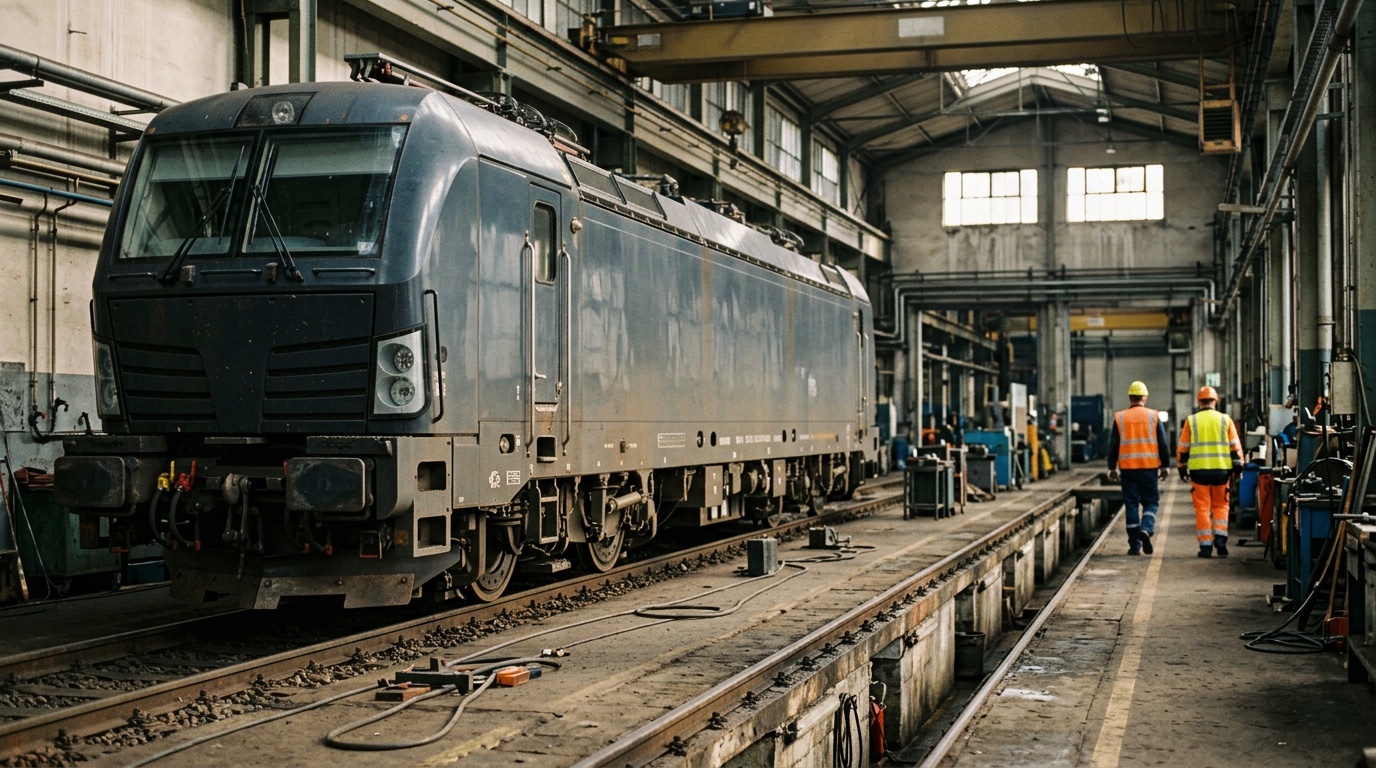
When the business rests on assets (a fleet, a machine park, leased equipment), the question becomes: what does each asset earn and cost? Answering it means combining accounting and operations in a single data warehouse, which neither tool does on its own.
THE TOPICS WE HANDLE
Entries from the accounting software loaded into the warehouse, then split by entity, business or contract according to written rules.
Each asset with its status, its contract and its figures, up to date without re-keying.
What the accounts say set against what the business tools say, with the list of gaps. This is a data quality topic.
Power BI dashboards for finance and the executive team, fed by a single model.
FREQUENTLY ASKED QUESTIONS
Rarely. We read its database, schedule exports, or write a Python connector. For a rail leasing company, the Sage 100 accounting database feeds finance’s P&L and fleet statements.
No. We keep the tool your teams know. What changes is underneath: calculations leave the Power BI files for tested dbt models that all reports share. See Looker or Power BI.
The question is not volume, but how many times someone rebuilds the same report. A warehouse like BigQuery is billed by usage and needs almost no administration: for modest volumes, the platform stays light.
READ NEXT
WHAT COMES NEXT, WE BUILD TOGETHER
An idea, a pain point, a project to kick off? Let’s talk about what would make a difference for your teams.
Let’s talk about your project